
Last Man Standing
Mike Shonsey & the Johnson County War

If you caught my recent episode on Nate Champion, or the previous series I did on outlaw-turned-lawman Frank Canton, then you already know the story of how Wyoming’s cattle barons hired an army of Texas gunmen in 1892 to invade Johnson County and assassinate the small ranchers they accused of rustling. You know how Nate Champion held off that army alone for hours, writing in his diary while his cabin burned around him, before making a final desperate run and being cut down in a hail of bullets. And you know that nobody ever went to prison for any of it.
What I didn’t get into was what happened to Nate’s brother.
Rufus Dudley Champion, known as Dud, was about eighteen months younger than Nate and apparently looked so much like him that people sometimes mistook them for twins. Dud had come up the cattle trail from Texas with Nate more than a dozen years earlier, and the two had been extremely close. So when word reached Dud that his brother had been killed at the KC Ranch, he saddled his horse and rode hell for leather to Wyoming. Whether he came looking for work or revenge depends on which account you believe.
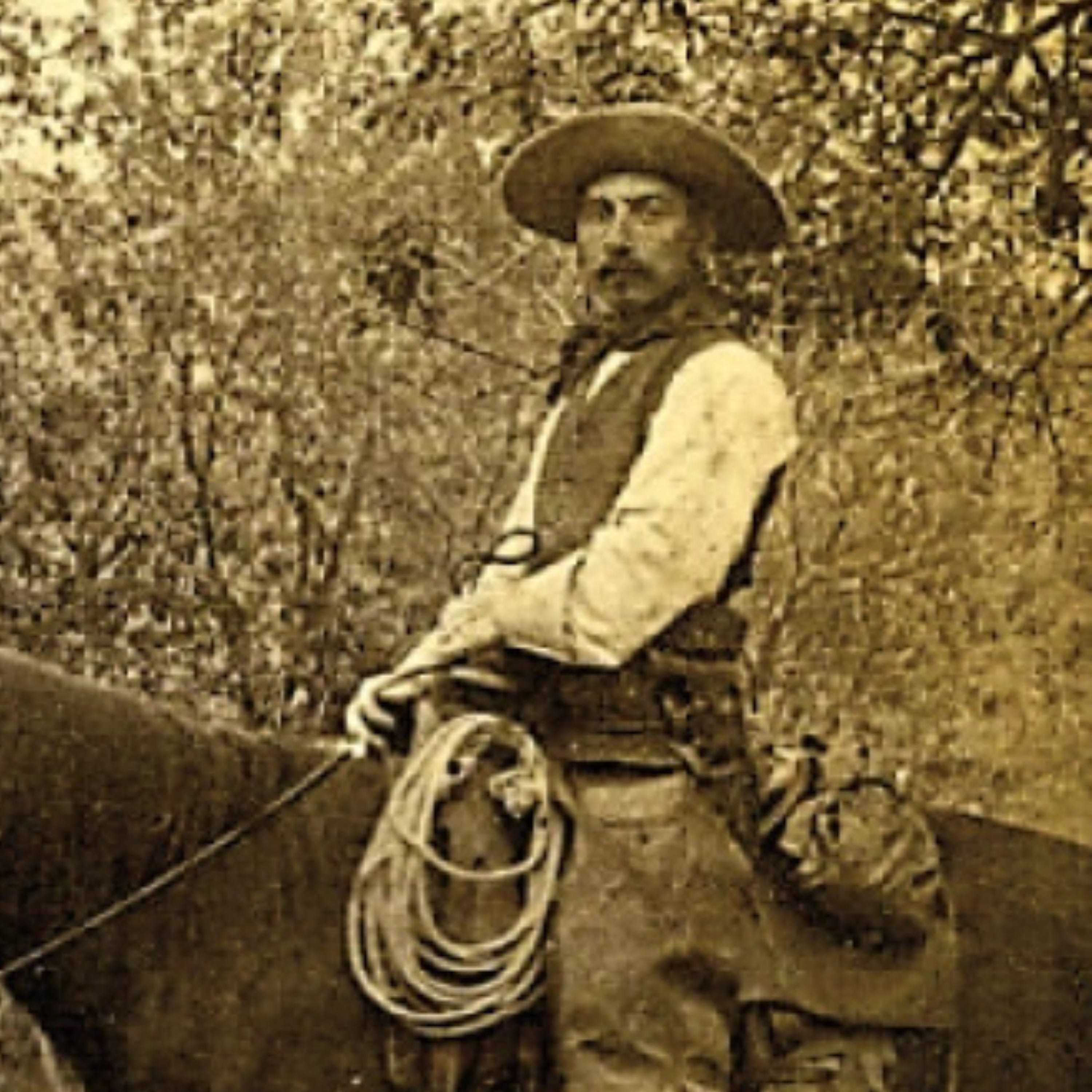
On May 23, 1893, barely a year after Nate’s death, Dud arrived at a cow camp about twenty miles northeast of Lusk, Wyoming. And in one of those cruel coincidences the Old West seemed to specialize in, one of the men already sitting in that camp was Mike Shonsey. The same Mike Shonsey who had spied on Nate for the cattle barons and who had been part of the force that killed him at the KC Ranch.
According to a manuscript by Dr. William A. Hinrich of Douglas, Wyoming, the exchange was brief. Mike greeted Dud and told him he’d heard that Dud had threatened to kill him on sight. Dud denied it, and Mike reached for his gun. He saw Dud’s hand move toward his own revolver, and fired first. Dud fell from his horse, and Mike shot him twice more.
As Dud lay dying, he asked a bystander named David Mathews to take his six-shooter and tell everyone that Mike Shonsey had killed him. When Mathews asked why he hadn’t fired back, Dud’s last words were haunting: “I can’t cock it. I can’t cock it. I can’t cock it.” The boys later checked his pistol and discovered it was so clogged with dirt that the cylinder wouldn’t turn.
Mike rode into Lusk, turned himself in, and called it self-defense. A coroner’s jury soon cleared him, but the very next day, witnesses came forward claiming it had been a cold-blooded murder. Of course, by then Shonsey was already on a train headed south, out of Wyoming for good. Author Helena Huntington Smith would later observe that Dud’s dying words didn’t exactly sound like a man who had been planning a killing.
And that was it. Two Champion brothers were dead, and nobody was punished for either one.
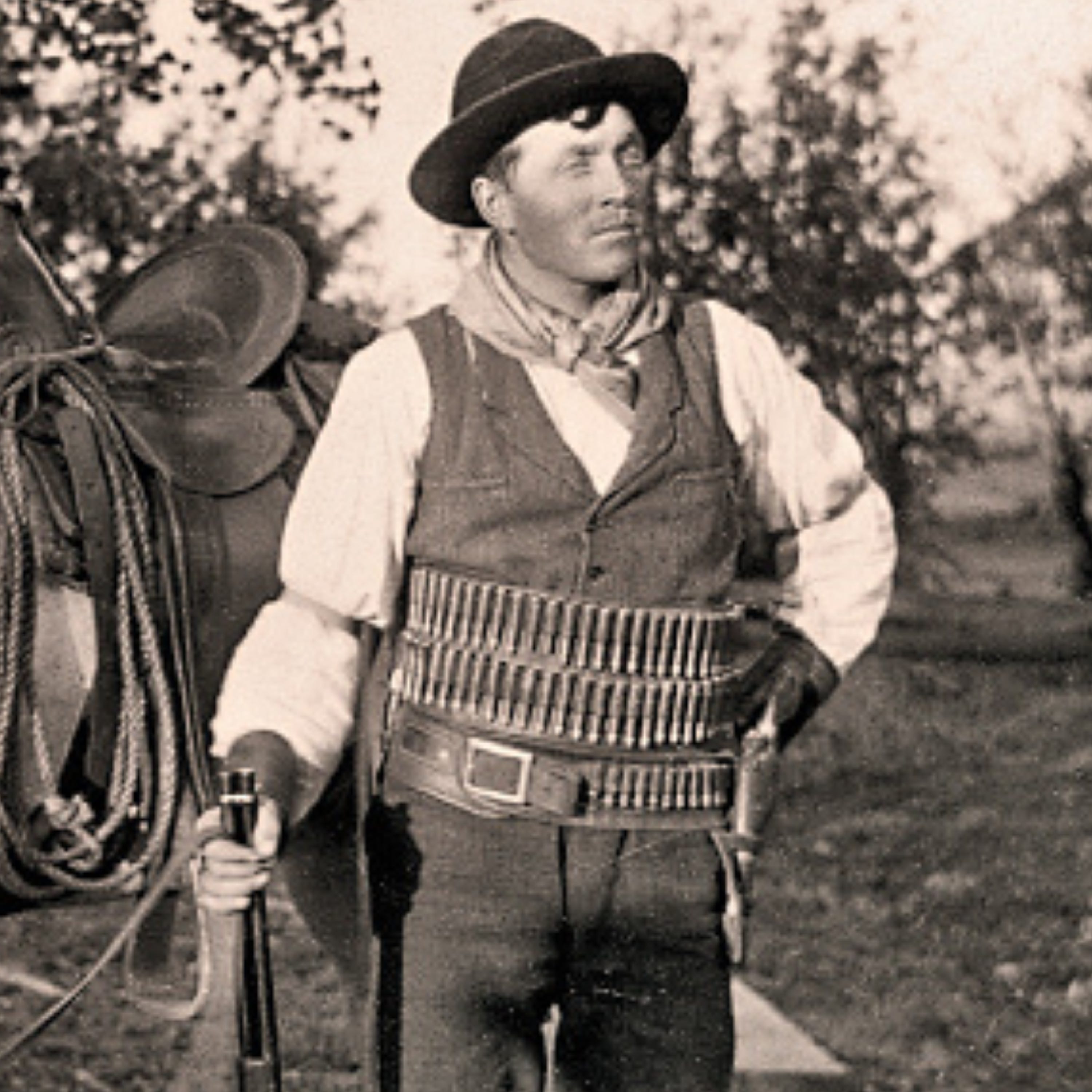
Mike settled in Nebraska, married, raised a family, and became one of the most respected cattlemen in the region. When his first wife, Olive, died in 1905, he remarried a year later. He lost a son at Belleau Wood in 1918, but kept right on raising cattle.
He also kept his mouth shut about Wyoming.
When a magazine writer named Virginia Trenholm finally tracked him down for an interview in the 1950s, she found a small, erect old man with snow-white hair, a kerchief around his neck, and an uncanny memory for cattle brands. He told her the whole Johnson County War had been a “crazy-reckless thing.” He admitted he’d been a spy for the cattle owners, but he never expressed regret.
Mike Shonsey passed away on August 5, 1954, the last surviving participant of the Johnson County War. That’s the same year Bing Crosby starred in White Christmas, and Marlon Brando starred in On the Waterfront. If you’re currently over the age of seventy-two, you were alive at the same time as a man who helped invade Johnson County, killed a Champion brother in a cow camp, and lived long enough to see the atomic bomb and Eisenhower in the White House.
Like I always say, the Old West really wasn’t all that long ago.
One More Thing
Another question I got regarding the most recent episode on Nate Champion is what became of his journal? Did he really take it with him as he stormed out of the burning cabin and into a hail of gunfire?
Apparently, the answer is yes.
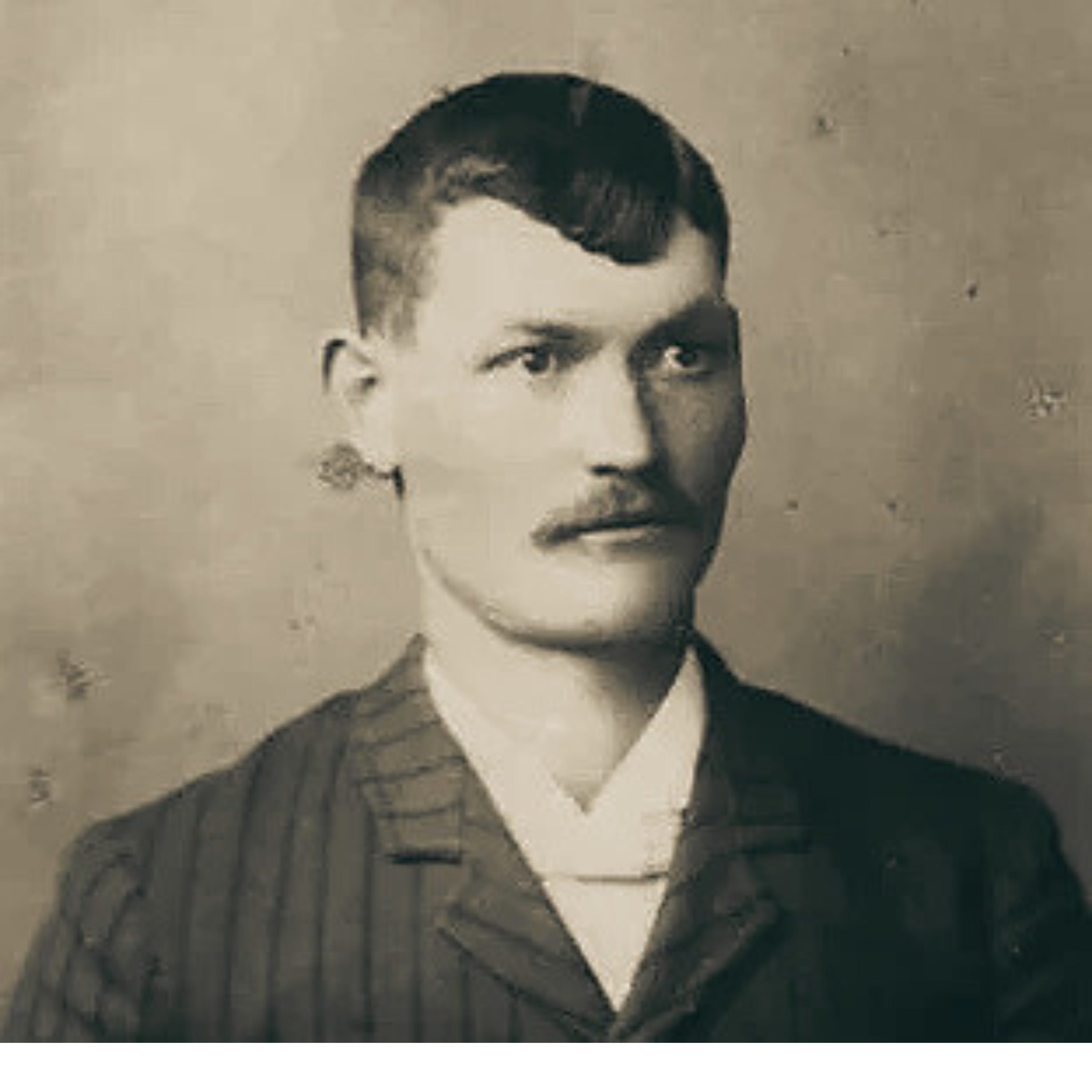
The journalist who got the diary was Sam T. Clover, a correspondent for the Chicago Herald. Clover had been invited by the WSGA to accompany the invaders, specifically to spin the story in their favor. After Champion was killed, the invaders found the blood-soaked diary in his vest pocket. They removed several pages (the ones where Champion had written the names of his attackers) and left the rest, figuring there was nothing incriminating in it. Clover then took possession of the diary and published Champion’s words on the front page of the Chicago Herald, where they became an immediate sensation.
Here’s the thing, though: When Billy Irvine, one of the leaders of the invasion, later demanded that Clover return the physical diary, Clover told him it had been destroyed.
Whether that’s true or not, nobody knows. The original diary has never been found. What survives today, the text on the historical marker in Buffalo and the words quoted in every book about the Johnson County War, all come from what Clover published in the Herald. The actual notebook, the little red tally book written in pencil with a bullet hole through it, is gone. Either destroyed by a journalist or hidden so well that it hasn’t surfaced in over a hundred and thirty years.
Thanks. I found this interesting ! Keep up the good work!
❣️