
White Man Runs Him
How a Crow named for stealing candy outlived Custer's Last Stand by fifty years

The name was supposed to be a joke. As a boy in the Bighorn country, White Man Runs Him swiped candy from a trader’s store, and the shopkeeper came charging after him. In Crow tradition, a name often fastens onto an incident like that, and this one stuck. It wasn’t meant as an insult. The Lakota and Cheyenne would later turn it into one, throwing it back at him for riding with the bluecoats, but among his own people, it was just the story of a fast kid and a slow shopkeeper. And in time, he grew up into something harder to mock: a young warrior known for bold horse-stealing raids against his enemies.
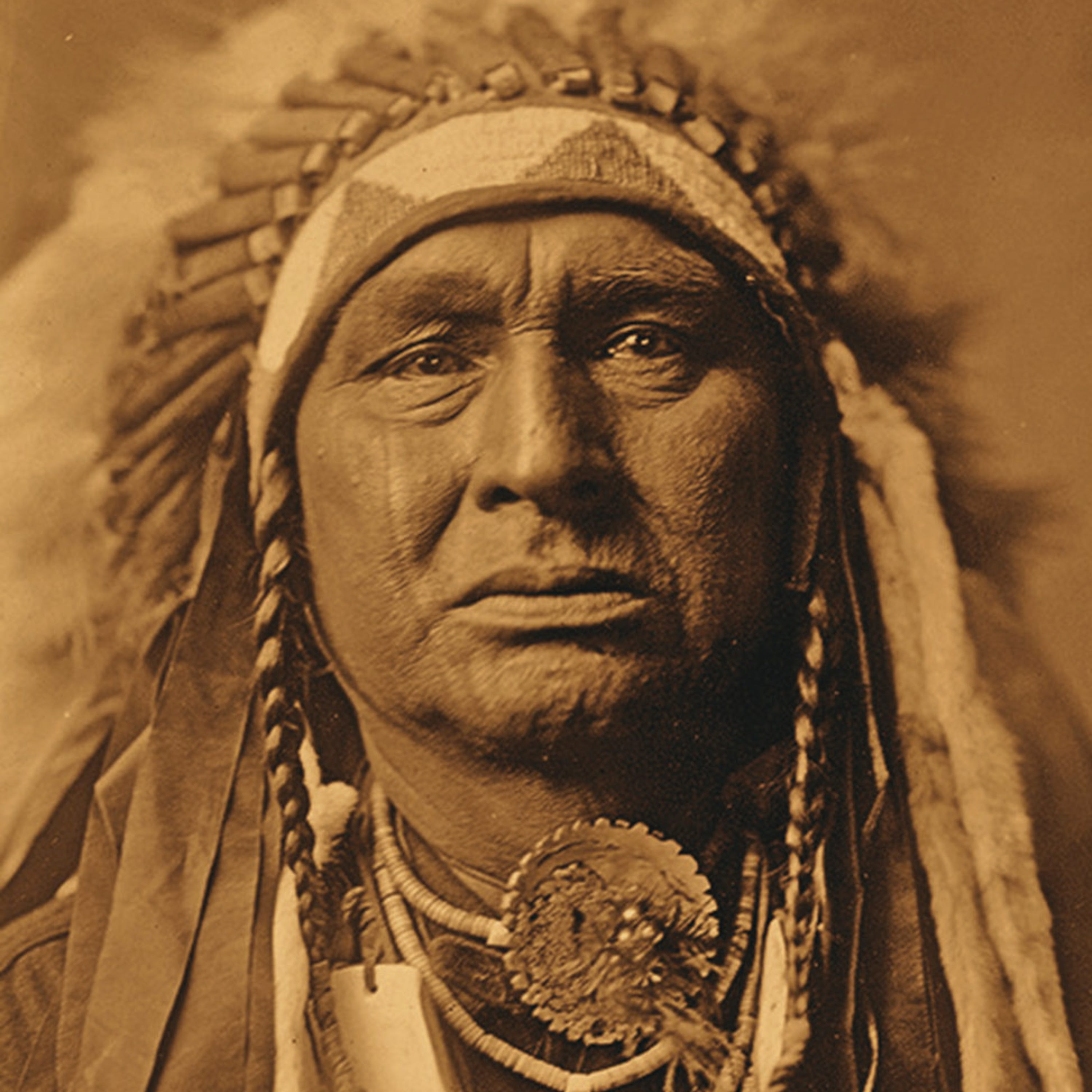
He was born in what’s now Montana, sometime around 1858, to parents Bull Chief and Offers Her Red Cloth. On April 10, 1876, at about eighteen years of age, he enlisted as a scout at the Crow Agency. By June 21, he had been folded into Custer’s 7th Cavalry as one of six Crow scouts, alongside Goes Ahead, Hairy Moccasin, Curly, White Swan, and Half Yellow Face. The logic was simple. The Lakota and Cheyenne were the Crow’s oldest enemies and had been pushing deep into Crow country in violation of the 1851 Fort Laramie Treaty. Riding with the Army wasn’t a betrayal of who the Crow were, so much as a way to fight the people already taking their land, with better odds.
His most important work happened before the first shot was even fired. In the still-dark hours of June 25, he climbed with Lieutenant Charles Varnum and others to the Crow’s Nest, a high point on the divide between the Little Bighorn and the Rosebud. From there, some seventeen miles off, they could read the valley: smoke and a herd of horses so large it gave the camp away even though the lodges themselves stayed hidden. He and his fellow scouts told Custer plainly that the village was enormous, but their warnings went unheeded. The so-called boy general still ordered the attack.
What happened to the Crow scouts after that depends on who you ask.
According to White Man Runs Him, the scouts meant to ride down with Custer toward Medicine Tail Coulee and the river, but their chief scout, Mitch Boyer, sent them back to the pack train. After all, they were hired to find the enemy, not to die with the 7th.
The more theatrical version has the scouts certain they were about to be killed, stripping off their Army clothes and pulling on Crow war garb, and when Custer demanded to know why, they told him they meant to die as warriors and not as soldiers. Per this rendition, Custer, disgusted by the fatalism, threw them off the detail about an hour before the end.
Contrary to popular belief, White Man Runs Him didn’t simply vanish. By his own account, and supported by the record, he fell back to the ridge with Goes Ahead, Hairy Moccasin, and an Arikara scout, found Reno’s men dug in there, and stayed through the afternoon under fire. When night came, he slipped through the lines to reach the relief column.
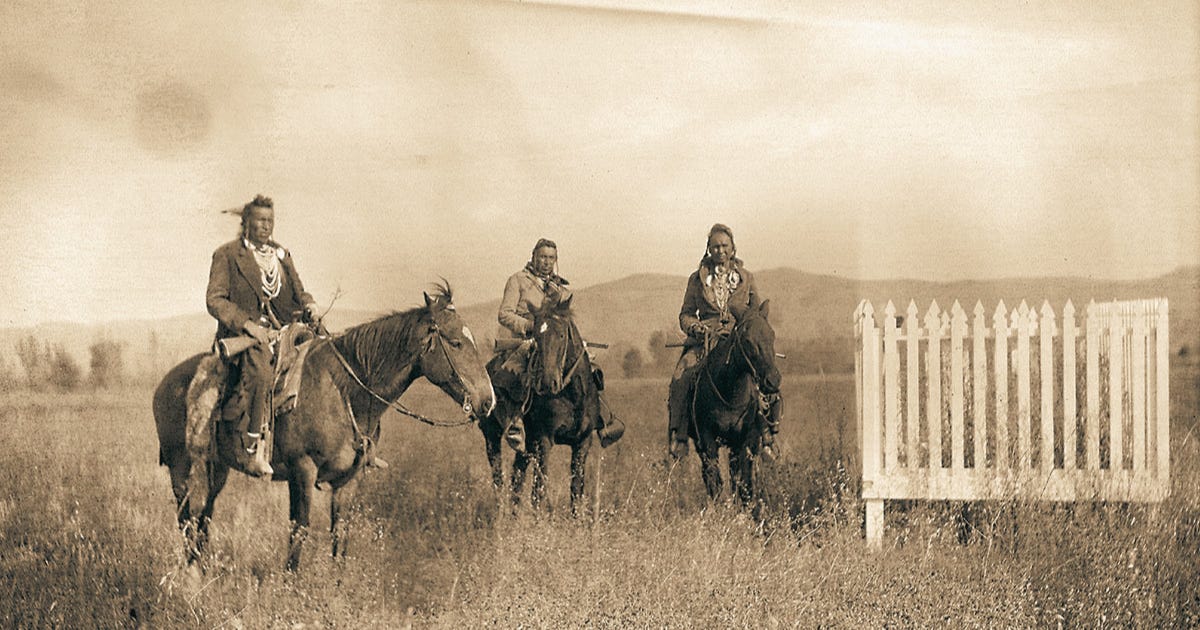
He lived out his years on the reservation near Lodge Grass, a few miles from the battlefield. He became a minor celebrity as one of the survivors, shook hands with a Wyoming governor, and even turned up in a 1927 Hollywood Western. He was the step-grandfather of decorated WW2 veteran Joe Medicine Crow, and grandfather of Pauline Small, the first woman elected to office in the Crow Tribe of Montana. He died June 2, 1929, and was buried in the cemetery on the battlefield itself.
History is full of these minor people with fascinating stories!
Great history snd story !